Seven Deadly Sins, Part 4: Control
The real division is not between conservatives and liberals but between those who believe they should control others and those who don’t. George Orwell.
One day, you find yourself in a place in your life you never thought you’d be, and you wonder: how did I get here?
We like to think we’re free, captain of our own ship, author of our fate. But if you look around, you’ll see that everything’s set up to keep you predictable, manageable, and easy to shepherd.
If money is the fuel, religion the script, and politics the theatre, then control is the hand on the back of your neck, guiding you, pushing you one way without you even realising.
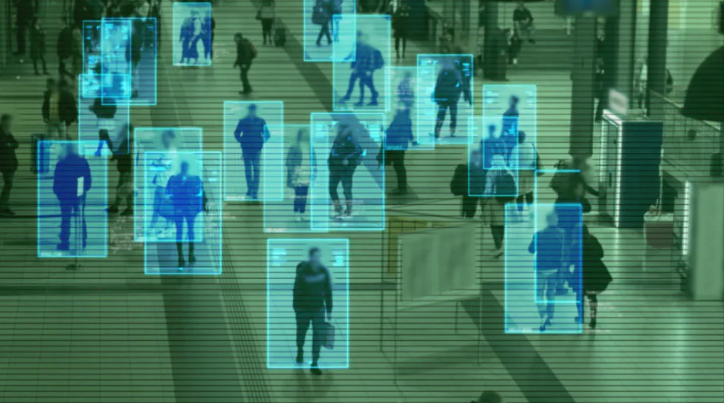
Image: ACLU, California Action
Control is blatant. Cameras on every pole. A digital footprint for every citizen. Levels of monitoring that would have caused riots thirty years ago, now shrugged off with “if you’ve got nothing to hide…” It’s wild how fast people surrender their freedoms when the state tells them, “It’s for your safety.”
After 9/11, the US government seized the moment. Under the banner of “national security,” they rammed through the Patriot Act; mass surveillance, secret lists, detention. A whole country convinced that suspicion was patriotism. People accepted it because they were terrified.
Control is a narrative. The powerful tell you who to hate, who to fear, who to pity, who to punish. “Illegals.” “Junkies.” “Terrorists.” The targets shift, but the message never does: someone out there is a threat, and only tighter control will save you. And if reality isn’t frightening enough, they create a fresh monster. Think of the 1980s Satanic Panic. A nationwide frenzy over imaginary cults and ritual sacrifices, all built on false memories and bad investigations, yet used to justify paranoia and suspicion.
Control is bureaucratic. Centrelink, NDIS, immigration, housing, all built like a Kafka novel. Every form, delay, review, and request for “additional evidence” exists to remind your not trusted and must conform.
Control is moralistic. Women’s bodies, trans bodies, poor bodies, drug-using bodies. The outrage machine lights up. Laws, restrictions, “community standards”. They wrap it all in the language of compassion, but their compassion shows up wearing a ski mask and standard-issue boots.
Control is high-tech. Social media algorithms reinforce political ideas by creating “echo chambers” and “feedback loops” which fill your feed with content reinforcing existing beliefs. This kind of targeted content strengthens biases, drives people further apart, and makes misinformation spread faster.
Control is respectable. Tone-policing, respectability politics, the pressure to be grateful, quiet, appropriate. To do things the proper way. It’s social obedience disguised as politeness, a way to ssshh you enough not to upset someone who thinks they’re more important. And control thinks it’s more important than you.
Remember when the kids walked out for the climate strike and Scott Morrison wagged his finger, saying “Learning gets done in schools” and “they’ll learn nothing from protesting”? They learned plenty that day: the government didn’t give a fuck about their future.
Morrison later slunk out of parliament under the weight of his own scandals. I’d say he resigned in disgrace, but this guy has no shame.

Scott Morrison carries a lump of coal to parliament to show his support for the fossil fuel industry. 2017
But there is cracks in the story of control: people don’t always behave the way the powerful assume. For all their walls and warnings, human nature isn’t built for chaos, it’s built for connection.
You see that after a disaster. The elites want you to believe that disaster equals anarchy - the mob looting, society collapsing, Lord of the Flies. There is a bit of that, that’s not the main story. Real crises shows the opposite. After every earthquake, flood, fire, people risk their lives to pull strangers from the rubble. Communities organise themselves before governments even knew what to do.
And this is what the powerful fear. There’s even a name for it, “elite panic”. It’s the term used to describe how the powerful behave during disasters; not with calm leadership, but with a fear that the public will become dangerous. Instead of focusing on relief, they pivot to policing, surveillance, and top-down “command and control” measures designed to protect the hierarchy, not the people. This doesn’t just waste resources, impede disaster response and risk lives. One study notes; they also “undermine the public’s capacity for resilient behaviors.”
They say they’re worried about rioters. Really, they’re worried about losing their grip.
Some people claim the elites just misunderstand human nature; I don’t buy that. They know exactly what they’re doing. They push the story that people are selfish beasts because it keeps them on top. But philosophers like Rousseau had it right: people are naturally cooperative, and it’s society, especially the bit run by the powerful, that corrupts us into distrust.
When you zoom out, the pattern is clear: humans instinctively support each other; Disasters don’t reveal savagery, they reveal solidarity. Our instinct isn’t chaos; it’s care. We just need to be reminded of it every now and then so it doesn’t take a disaster to bring us together. Here is thar reminder from the greatest philosopher of them all - the Doctor. Yes, that one.
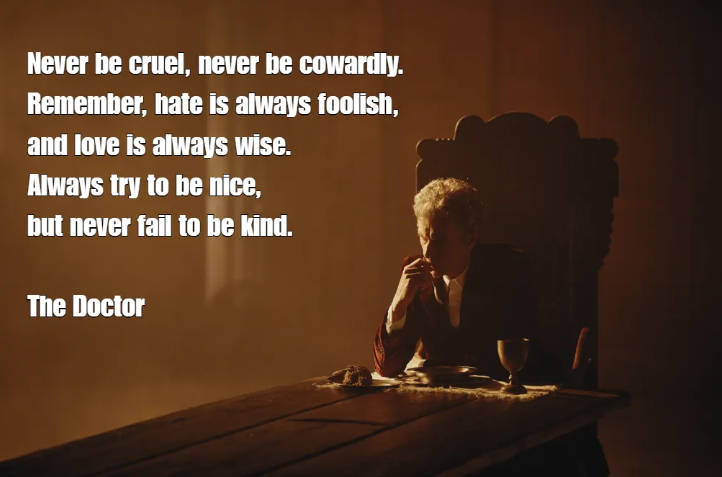
“Never be cruel, never be cowardly. Remember, hate is always foolish, and love is always wise. Always try to be nice, but never fail to be kind.”