
THE STORY OF COCAINE, PART ONE: SACRED LEAVES
High in the Andes, among the Quechua, descendants of the Inca, there is a legend.
In the highlands of Peru, Bolivia, and Ecuador, there is a legend that tells of a woman named Kuka, who was so beautiful that any man who saw her fell in love with her. Kuka’s beauty drove men mad with desire. She used it to manipulate the men in her village, and her behaviour caused so much conflict that the Great Inca himself, to restore order and after observing the stars, ordered her sacrifice.
From Kuka’s grave a new, magical plant grew. A plant unlike anything the people had ever seen. They chewed its green leaves, their hunger vanished, and they felt strong and focused. They named the plant Kuka in honour of the woman who had given it to them.
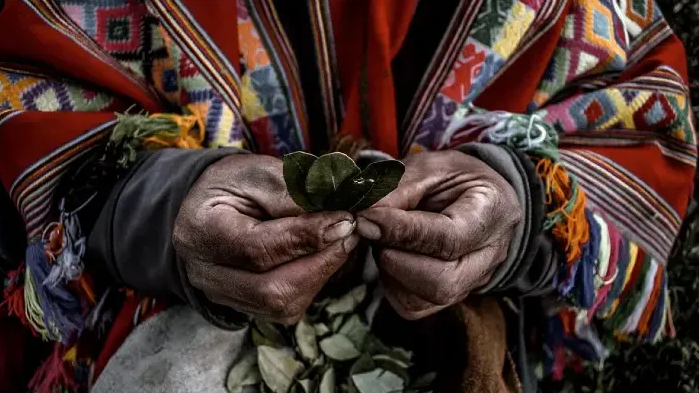
Image: Inka Time
Kuka became vital to every part of the people’s lives. They chewed the leaves with lime to banish fatigue and altitude sickness. Relay runners, known as the Chasquis, powered by Kuka tucked in their cheeks, could run flat-out for 15 kilometres on high-altitude mountain paths before passing a message to the next runner. Messages could travel up to 240 kilometres in a single day and cross the entire empire, more than 2,500 kilometres, in only a few days.
Labourers mixed coca with maize beer to fuel long days in the fields and quarries. Priests burned the leaves in ceremonies, reading omens in the smoke and speaking with the spirits. Kuka was offered to the mountains, the earth, and the dead. It was placed in graves so ancestors wouldn’t enter the next life empty-handed. It was a natural anaesthetic, used to numb pain, clean wounds, set bones, and dull the edge of suffering.
For the Quechua, and the Inca before them, Kuka wasn’t a drug. It was a sacred companion. It was a bridge between body, spirit, and the world they called home.
And then the Spanish arrived.
Francisco Pizarro reached the Inca Empire in 1531 with 180 men and 30 horses. What they found stunned them. Stone cities clung to cliff edges. Roads stretched for thousands of kilometres, carved through mountains. Storehouses overflowed with grain, textiles, and gold. Taking advantage of a civil war, Pizarro and his companions captured and toppled the ruler, Atahualpa, in 1532. The Spanish wrote in awe about the empire’s organisation, terraces, and temples, and then set about stripping it bare.
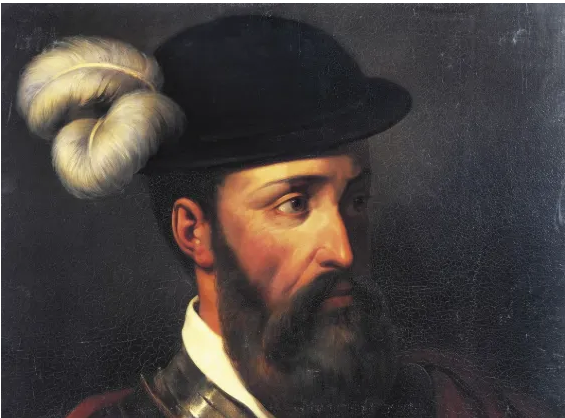
Francisco Pizarro, attributed to Jean Mosnier (or Monier), and was painted in the early to mid-17th century.
Steel, horses, and gunpowder tore through stone cities and mountain villages alike, but it was disease that did the real damage. Smallpox, measles, and influenza raced ahead of the conquistadors, emptying entire regions before a single battle was fought. Within decades, the people of the land were almost wiped out. In some areas, only one in ten survived. Empires fell not just to violence, but to invisible enemies carried in European lungs and blood. What had taken thousands of years to build was broken in a single brutal generation.
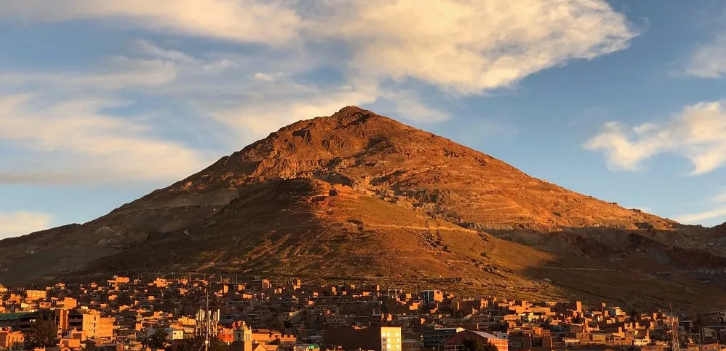
In 1545, the Spanish found silver at Potosí, in modern-day Bolivia. The mountain was so rich they called it Cerro Rico - “the Rich Hill.” Over the next two centuries, roughly half the world’s silver was dug out of Potosí, funding the Spanish Empire, fuelling European wars, and reshaping global trade.
But silver is heavy, and it was carried on human backs.
To feed the mines with workers, the Spanish twisted the old Inca labour draft, the mita, into a brutal system of forced labour. Tens of thousands of men were ripped from their communities and driven into tunnels nearly 4,000 metres above sea level, breathing mercury fumes, working by candlelight in collapsing shafts. It’s impossible to know the true death toll, but historians believe it ran into the millions. Among the Quechua there is a saying: you could build a silver bridge from Potosí to Madrid from what was taken out, and another back with the bones of those who died mining it.
The Spanish translated Kuka to coca. Their priests banned it as devil worship, outraged by its role in ancestrial ritual and spiritual life. But colonial administrators saw what the priests did not: coca kept people alive long enough to be exploited.
Coca eased altitude sickness. Killed hunger. Numbed pain. Let exhausted bodies work another shift. It made the unbearable possible.
So coca was promoted, not as a sacred plant, but as a tool of extraction. Rituals were banned, but coca rations became mandatory for miners. The Spanish taxed its trade, enriched themselves, and turned coca fields into another cog in the machinery of colonial wealth.
Within a few short years, coca had been transformed. Not by the people who cherished it, but by those who saw profit in their suffering.
The holy plant became a symbol of oppression.
The Quechua people survived. They outlived empires, borders, and the violence of the silver mines, and they still chew the sacred leaf that once grew from Kuka’s grave. Today, most are Catholic by force of colonisation, but the old beliefs never vanished. Ancient traditions still bleed into Christian practice, and for many, Mama Koka endures, not just as a plant, but as a living spirit woven into culture, ritual, and survival.
And that is where the story of cocaine truly begins: not with laboratories or white powder, but with conquest. With a sacred leaf taken from its people and pressed into the service of empire.
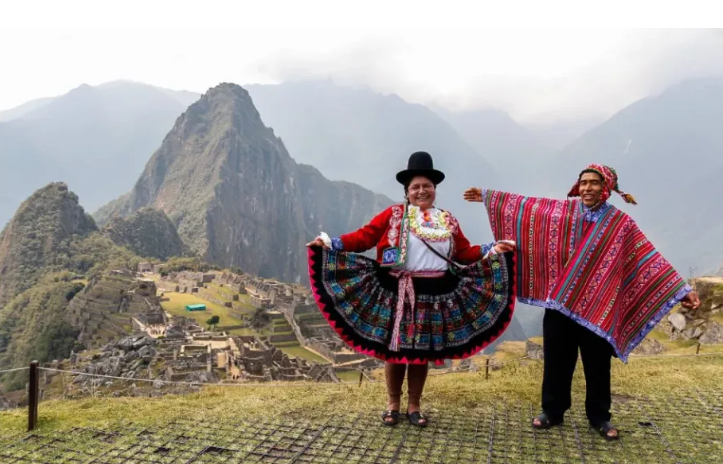
Two Quechua people at Machu Picchu | Photo by Gercetur